Week two went pretty well for me . . . up until the end. I definitely figured out some great ways to get lots more fruits and veggies into my diet (I even maxed out at 10 servings once this week! Five extra points!!), I got lots of exercise, drank loads of agua and kept the alcohol to a minimum. Those extra points should come in handy, though, as I managed to go a few drinks over Saturday night. Oh well. As my good buddy Anth says, "no need to feel any shame about it." This competition is all about progress and I definitely believe that I've made loads of progress since the start. This is also only the end of week two which means there's plenty of time to get ahead and figure out ways to be even more vigilant about my goals.
So, on to week three. I'm feeling pretty damn good. Despite a few extra drinks and not enough meditation (once again), I'm ready to tackle another week. Physically, I've felt stronger and seem to have a bit more endurance than before. My body also feels tighter. I suppose this is a result of cutting down on those frosty adult libations. These are great changes and I look forward to even more of the same.
Cheers!
Sunday, March 30, 2008

Thursday, March 27, 2008
Showdown contenders - batch 2

Jessica: Body fat: 23%
Circumference Measurements:
Arm: 9"12cm
Shoulders: 39"4cm
Chest: 35"5cm
Waist: 27" 4cm
Navel: 30"
Hips/Butt: 36"
Thigh: 19" 14cm
Calf: 14" 6cm
Fitness Challenges:
Push-up:
Pull-up:
Mile Run:

Cynthia: Body fat: 20%
Circumference Measurements:
Arm: 9"13cm
Shoulders: 38"
Chest: 34"
Waist: 27"
Navel: 28" 3cm
Hips/Butt: 34" 12cm
Thigh: 19"
Calf: 13" 8cm
Fitness Challenges:
Push-up: 39
Pull-up:
Mile Run:

Alex: Body fat:
Circumference Measurements:
Arm: 11"
Shoulders: 48"8cm
Chest: 44"8cm
Waist: 42"5cm
Navel: 44"6cm
Hips/Butt: 44"14cm
Thigh: 24"2cm
Calf: 14"8cm
Fitness Challenges:
Push-up: 21
Pull-up: 0
Mile Run:

Matt: Body fat: 17%
Circumference Measurements:
Arm: 11"15cm
Shoulders: 45"4cm
Chest: 36"8cm
Waist: 30"8cm
Navel: 32"1cm
Hips/Butt: 38"
Thigh: 18"12cm
Calf: 13"
Fitness Challenges:
Push-up: 52
Pull-up: 6
Mile Run: 8:26
 Andrea: Body fat: 22%
Circumference Measurements:
Arm: 9"12cm
Shoulders: 40"2cm
Chest: 34"9cm
Waist: 26"12cm
Navel: 27"15cm
Hips/Butt: 38"4cm
Thigh: 20"4cm
Calf: 14"2cm
Fitness Challenges:
Push-up: 42
Pull-up: 1
Mile Run: 10:00
Just a quick note on body fat as I know it migh seem that some of these numbers are high. Ideal body fat for women is anywhere from 20 - 27%. Ideal body fat for men is about 9 - 19%. Now, this measurement also takes into consideration muscle mass vs. fat mass, and you can improve your body composition by increasing your muscle mass. While many of us prefer to stick strictly to cardio, it's very important to perform strength training a few times per week. Strength training does not mean doing biceps curls with 2lb dumbbells; the jug of milk you buy at the store weighs more than that! You need to challenge yourself such that your muscles are fatigued by the end of 12-15 repetitions. I know that women tend to think that if they lift heavier weights that they'll bulk up, but it's simply not true. That takes A LOT of work (and possibly some supplements).
Monday, March 24, 2008
Meditation Primer - By Ryan Halvorson
May Peace Be With You: A Meditation Primer
by Ryan Halvorson
Life is crazy. It seems to move forward like a run on sentence. From the moment your sweet dreams are cut short by that obtrusive buzzer, to the very last blinks of consciousness late that evening, it seems as though there is never time to catch a breath. This frenetic pace in life is no surprise. Since childhood most of us have been taught that the importance of one’s life directly correlates to the accomplishments he’s made. Remember that old saying “the early bird gets the worm?” Well these days, not only does he get the worm, but he also gets high blood pressure, suffers from chronic stress, is well on his way to developing type II diabetes and, according to statistics, has a 50% chance of experiencing a mental disorder at some point in his life. Sure we have prescription drugs to help combat the negative effects of the American lifestyle, however many of them simply mask the symptoms instead of tending to the root of the problem. As a result, many are seeking alternative methods such as regular meditation to relieve pressure from life’s stressors.
What is meditation? The roots of meditation were formed long ago as East Asian philosophers began to research the connection between the mind, body and spirit. From that point on, various cultures and religious groups adopted ritualistic meditation for many reasons, such as to open up the path to God for example. Buddhists believe that the practice of meditation can reduce a person’s attachment to circumstances outside his control, which offers a less stressful and more fulfilling existence. Most often, however, meditation is used for contemplation purposes and to gain focus on the present moment. Many misconstrue meditation as strictly a religious practice, however the Dalai Lama has said that “You don’t have to become a Buddhist or adopt a particular religious faith [to meditate]. Everybody has the potential to lead a peaceful, meaningful life.” Now, as many as 10 million Americans meditate regularly and have discovered numerous benefits, anecdotal and research-based.
The benefits of regular meditation. When was the last time you sat in stillness for an extended period of time? I’m not talking about those last moments before you drift off to dreamland. No, I’m speaking more about an instance in which you turned off the television, disabled the ringer on the cell phone and simply sat. Do you remember such a time? Now, I’d like for you to take quick stock of your life and think about how many times during your day you experienced frustration, anger and stress. I also want you to think about what happened to your body during those experiences. Did your shoulders creep up next to your ears? Did you feel your heart pound and your blood boil? Did you get a headache? If you were able to relate to any of these emotions or feelings, meditation may be beneficial to you. According to research, even sitting in stillness for short time periods each day—less than even five minutes—can have significant results that last. Studies have shown that meditation can help lower blood pressure, heart rate, anxiety and stress, and can improve blood circulation, relaxation and feelings of well-being. Meditation has also shown enhanced concentration and immune function. And, after long-term practice, you might just be able to get rid of all those little nagging thoughts keeping you up late at night.
Types of meditation. There are several different varieties of meditations out there today. Some require absolute stillness while others include movement-oriented activity such as tai chi or chi kung. All formats, however, empasize learning how to stay in the current moment. Here are brief descriptions of a few of the most common forms of meditation:
· Concentration. Concentration meditation involves maintaining focus on something specific such as breath, candle light, the sound of a drum or gong, or a silently repeated word. The basic idea, however, is to remain concentrated on a single object, and to return to it as quickly as possible if the mind begins to wander.
· Mindfulness. This is a form of meditation in which the practitioner becomes an observer to the various thoughts that enter the mind. As an observer, you recognize a thought, but are careful not to gain attachment to it, or to assign judgment. In meditation, thoughts are not good, nor bad. 13th century Persian philosopher Rumi suggests treating each thought as a passing cloud. Look at it. Recognize it. Let it go. Oftentimes people become uncomfortable with the thoughts that enter the mind and make extra effort to avoid them. Experts warn against such tactics as they believe ignored thoughts become stronger and more difficult to let go of.
· Tai chi chuan. Head out to Balboa Park on a Saturday and Sunday morning, and you’re likely to find groups of slow-moving people practicing the Chinese martial art, tai chi. The slow, deliberate movements are intended to create greater physical and mental balance and requires ultimate concentration which makes it difficult to entertain stray, chattering thoughts.
Sample meditation. For those of you brave enough to delve into the calming world of meditation, the following method can act as an introduction to this widely-held practice.
1. Sit or lie so that the body is comfortable. If sitting, attempt to maintain a tall, solid posture by elongating the neck, keeping the back straight and chin parallel to the ground. Some prefer to sit cross-legged with the palms facing the sky
2. Close your eyes or focus them ahead and slightly downward.
3. Breathe effortlessly. Do not try to shorten or lengthen the breaths.
4. Allow yourself to observe the body’s sensations during inhalation and exhalation. Notice how the chest and abdomen expand and deflate. When the mind begins to wander, simply return the focus back to the breath and the body. If you’re new to meditation, try this technique for just a few minutes. Then, as you become more comfortable, extend the time a few minutes each subsequent session.
by Ryan Halvorson
Life is crazy. It seems to move forward like a run on sentence. From the moment your sweet dreams are cut short by that obtrusive buzzer, to the very last blinks of consciousness late that evening, it seems as though there is never time to catch a breath. This frenetic pace in life is no surprise. Since childhood most of us have been taught that the importance of one’s life directly correlates to the accomplishments he’s made. Remember that old saying “the early bird gets the worm?” Well these days, not only does he get the worm, but he also gets high blood pressure, suffers from chronic stress, is well on his way to developing type II diabetes and, according to statistics, has a 50% chance of experiencing a mental disorder at some point in his life. Sure we have prescription drugs to help combat the negative effects of the American lifestyle, however many of them simply mask the symptoms instead of tending to the root of the problem. As a result, many are seeking alternative methods such as regular meditation to relieve pressure from life’s stressors.
What is meditation? The roots of meditation were formed long ago as East Asian philosophers began to research the connection between the mind, body and spirit. From that point on, various cultures and religious groups adopted ritualistic meditation for many reasons, such as to open up the path to God for example. Buddhists believe that the practice of meditation can reduce a person’s attachment to circumstances outside his control, which offers a less stressful and more fulfilling existence. Most often, however, meditation is used for contemplation purposes and to gain focus on the present moment. Many misconstrue meditation as strictly a religious practice, however the Dalai Lama has said that “You don’t have to become a Buddhist or adopt a particular religious faith [to meditate]. Everybody has the potential to lead a peaceful, meaningful life.” Now, as many as 10 million Americans meditate regularly and have discovered numerous benefits, anecdotal and research-based.
The benefits of regular meditation. When was the last time you sat in stillness for an extended period of time? I’m not talking about those last moments before you drift off to dreamland. No, I’m speaking more about an instance in which you turned off the television, disabled the ringer on the cell phone and simply sat. Do you remember such a time? Now, I’d like for you to take quick stock of your life and think about how many times during your day you experienced frustration, anger and stress. I also want you to think about what happened to your body during those experiences. Did your shoulders creep up next to your ears? Did you feel your heart pound and your blood boil? Did you get a headache? If you were able to relate to any of these emotions or feelings, meditation may be beneficial to you. According to research, even sitting in stillness for short time periods each day—less than even five minutes—can have significant results that last. Studies have shown that meditation can help lower blood pressure, heart rate, anxiety and stress, and can improve blood circulation, relaxation and feelings of well-being. Meditation has also shown enhanced concentration and immune function. And, after long-term practice, you might just be able to get rid of all those little nagging thoughts keeping you up late at night.
Types of meditation. There are several different varieties of meditations out there today. Some require absolute stillness while others include movement-oriented activity such as tai chi or chi kung. All formats, however, empasize learning how to stay in the current moment. Here are brief descriptions of a few of the most common forms of meditation:
· Concentration. Concentration meditation involves maintaining focus on something specific such as breath, candle light, the sound of a drum or gong, or a silently repeated word. The basic idea, however, is to remain concentrated on a single object, and to return to it as quickly as possible if the mind begins to wander.
· Mindfulness. This is a form of meditation in which the practitioner becomes an observer to the various thoughts that enter the mind. As an observer, you recognize a thought, but are careful not to gain attachment to it, or to assign judgment. In meditation, thoughts are not good, nor bad. 13th century Persian philosopher Rumi suggests treating each thought as a passing cloud. Look at it. Recognize it. Let it go. Oftentimes people become uncomfortable with the thoughts that enter the mind and make extra effort to avoid them. Experts warn against such tactics as they believe ignored thoughts become stronger and more difficult to let go of.
· Tai chi chuan. Head out to Balboa Park on a Saturday and Sunday morning, and you’re likely to find groups of slow-moving people practicing the Chinese martial art, tai chi. The slow, deliberate movements are intended to create greater physical and mental balance and requires ultimate concentration which makes it difficult to entertain stray, chattering thoughts.
Sample meditation. For those of you brave enough to delve into the calming world of meditation, the following method can act as an introduction to this widely-held practice.
1. Sit or lie so that the body is comfortable. If sitting, attempt to maintain a tall, solid posture by elongating the neck, keeping the back straight and chin parallel to the ground. Some prefer to sit cross-legged with the palms facing the sky
2. Close your eyes or focus them ahead and slightly downward.
3. Breathe effortlessly. Do not try to shorten or lengthen the breaths.
4. Allow yourself to observe the body’s sensations during inhalation and exhalation. Notice how the chest and abdomen expand and deflate. When the mind begins to wander, simply return the focus back to the breath and the body. If you’re new to meditation, try this technique for just a few minutes. Then, as you become more comfortable, extend the time a few minutes each subsequent session.
Meditation can provide you with a great many benefits and can be practiced just about anywhere. As you become more adept, integrate its principles into your daily life and you’ll be amazed at how balanced and stress-free your days become!
The First Week - Zakiya
I was on vacation for the first week of the challenge so its been kind of a slow start. But considering that I stayed in 4 different beds in 3 states during the first seven days of this thing, I didn't do too poorly. I think everything will be easier once I'm on a regular routine.
The water intake is pretty easy as long as I'm conscious of the fact that I have to do it. A few times I've found myself drinking that last half-liter right before bedtime. Since I substitute teach and can't just go to the bathroom whenever I feel like it, (there were some uncomfortable moments over the past week) I've decided to keep it to one bottle of water during the school day and drink the rest after work. I also think I'm going to have to buy a Brita pitcher cause I'm not liking tap water as much and I hate not reusing all these bottles.
I jacked up my knee on the (old decrepit) treadmill at my mom's house which sucks but I've taken long walks since then and hopefully the knee will heal before the parcourse this week. This is the area I think will make the difference for me. I'm beginning to think that 3 times/wk may not be enough exercise to get myself in the kind of shape I want to be in. I may have to sacrifice in some other areas to make the time.
I had only tried meditation twice before this week. I'm kind of skeptical and cynical in general and my mind refuses to focus on one thing (East Coast, remember?) but I guess it takes practice. I'm trying to look for meditation podcasts but so far the ones I've found are lame.
I bombed out on the alcohol consumption. I had five drinks on St. Patty's Day in Baltimore (does it count if the drinks are green?), and no drinks the entire time I was in PA, but on my last night of vacation I totally binge drank with my old buddies. I figure we drank for a solid 7 hours or so. Good times. 4 drinks per week won't even give me a buzz, so I'm wondering if I'd be able to just cut out alcohol all together. Now that would be a challenge.
So I didn't exactly have a stellar start to the Springtime Showdown. I'm trying not to be too hard on myself since the real test will be in the coming weeks when life is more stable. The bright side is that I still managed to get in 3 work-outs, I've consistently ate all my veggies, I'm getting used to the meditation thing, and have made all around better choices when deciding what to eat on vacation than I would have with out the challenge. I'm sincerely looking forward to the coming weeks.
The water intake is pretty easy as long as I'm conscious of the fact that I have to do it. A few times I've found myself drinking that last half-liter right before bedtime. Since I substitute teach and can't just go to the bathroom whenever I feel like it, (there were some uncomfortable moments over the past week) I've decided to keep it to one bottle of water during the school day and drink the rest after work. I also think I'm going to have to buy a Brita pitcher cause I'm not liking tap water as much and I hate not reusing all these bottles.
I jacked up my knee on the (old decrepit) treadmill at my mom's house which sucks but I've taken long walks since then and hopefully the knee will heal before the parcourse this week. This is the area I think will make the difference for me. I'm beginning to think that 3 times/wk may not be enough exercise to get myself in the kind of shape I want to be in. I may have to sacrifice in some other areas to make the time.
I had only tried meditation twice before this week. I'm kind of skeptical and cynical in general and my mind refuses to focus on one thing (East Coast, remember?) but I guess it takes practice. I'm trying to look for meditation podcasts but so far the ones I've found are lame.
I bombed out on the alcohol consumption. I had five drinks on St. Patty's Day in Baltimore (does it count if the drinks are green?), and no drinks the entire time I was in PA, but on my last night of vacation I totally binge drank with my old buddies. I figure we drank for a solid 7 hours or so. Good times. 4 drinks per week won't even give me a buzz, so I'm wondering if I'd be able to just cut out alcohol all together. Now that would be a challenge.
So I didn't exactly have a stellar start to the Springtime Showdown. I'm trying not to be too hard on myself since the real test will be in the coming weeks when life is more stable. The bright side is that I still managed to get in 3 work-outs, I've consistently ate all my veggies, I'm getting used to the meditation thing, and have made all around better choices when deciding what to eat on vacation than I would have with out the challenge. I'm sincerely looking forward to the coming weeks.
Sunday, March 23, 2008
My First Week--Rafa
I've realized that even after a full 2 years of incorporating fitness into my life, and constantly changing my fitness routines, and still have a long way to go. I must admit a was a bit discouraged when I realized that my body fat was so high. But then I put it all in perspective by remembering that I led a pretty sedentary lifestyle up until 2 years ago, so in reality, I've come a long way (baby).
That being said, I still do have a lot of work to do to get my body where I would want it to be. Hence this competition.
My first week was not too difficult I must admit. I've been able to easily incorporate 5 servings of fruits and vegetables into my daily diet by making smoothies in the morning chock full of healthy ingredients such as spinach, carrots and some mixed berries. Water intake has also been relatively easy. And I already include 5 days of exercising in my week so that was not difficult.
My two challenges have been what some might consider the easiest: meditation and alcohol intake. Meditation has been sporadic, but I try to make up for the days I don't complete my 10 minutes by making my other sessions longer. And limiting my alcohol intake to 7 drinks a week was also a challenge, but I'm happy to say that I met that goal with flying colors. Saturday was an alcohol-free day for me (a first in quite a long time!)
On to week 2. I look forward to reading everyone else's progress.
That being said, I still do have a lot of work to do to get my body where I would want it to be. Hence this competition.
My first week was not too difficult I must admit. I've been able to easily incorporate 5 servings of fruits and vegetables into my daily diet by making smoothies in the morning chock full of healthy ingredients such as spinach, carrots and some mixed berries. Water intake has also been relatively easy. And I already include 5 days of exercising in my week so that was not difficult.
My two challenges have been what some might consider the easiest: meditation and alcohol intake. Meditation has been sporadic, but I try to make up for the days I don't complete my 10 minutes by making my other sessions longer. And limiting my alcohol intake to 7 drinks a week was also a challenge, but I'm happy to say that I met that goal with flying colors. Saturday was an alcohol-free day for me (a first in quite a long time!)
On to week 2. I look forward to reading everyone else's progress.
Week 1 Wrap-up - Ryan
The first week of the challenge is now just about over. So far, the biggest obstacles for me have been getting in regular meditation and sticking to the 7 drink limit. I admit to going over that limit by two, however I am still very pleased with my progress. Getting all the servings of fruits and veggies as well as drinking enough water have been somewhat easy so far. I may be jumping the gun, but I already feel a whole lot better and am enjoying the structure this challenge provides.
Looking forward to week two!
Looking forward to week two!
Tuesday, March 18, 2008
The Baselines
Day one is finished. Hopefully everyone met with great success and if not, are fast figuring out what needs to be done in order to achieve each of the goals. Now onto the baselines for each individual... A special "thank you" to those of you who made it out to last Saturday's (frigid!) baseline measurement meeting. The temperature was low and the wind was unforgiving, but this tough crowd managed to bare all despite the difficult circumstances.
Here are the contenders:

Luke: Body fat: 14%
Circumference Measurements:
Arm: 12" 7cm
Shoulders: 46"
Chest: 38" 4cm
Waist: 33"
Navel: 32" 13cm
Hips/Butt: 38" 4cm
Thigh: 20" 8cm
Calf: 14" 8cm
Fitness Challenges:
Push-up: 68
Pull-up: 16
Mile Run: 6:53
 Casim: Body Fat: 24.5%
Circumference Measurements:
Arm: 12" 12cm
Shoulders: 48" 1cm
Chest: 39" 15cm
Waist: 34" 14cm
Navel: 37" 1cm
Hips/Butt: 42" 6c
Thigh: 20" 14cm
Calf: 14" 1cm
Fitness Challenges
Push-up: 42
Pull-up: 7
Mile Run: 11:48


Armando: Body fat: 22%
Circumference Measurements:
Arm: 11" 4cm
Shoulder: 43" 7cm
Chest: 36" 15cm
Waist: 31"7cm
Navel: 32"
Hips/Butt: 37"10cm
Thigh: 19"4cm
Calf: 13"13cm
Fitness Challenges:
Push-up: 30
Pull-up: 8
Mile Run: 8:39
 Marcela: Body fat: 31%
Circumference Measurements:
Arm: 10" 8cm
Shoulders: 38" 8cm
Chest: 36" 13cm
Waist: 29" 4cm
Navel: 33" 14cm
Hips/Butt: 36" 12cm
Thigh: 18" 14cm
Calf: 12" 14cm
Fitness Challenges:
Push-up: 21
Pull-up: 1
Mile Run: 10:19
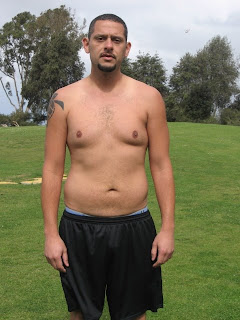 Rafael: Body fat: 27%
Circumference Measurements:
Arm: 13"
Shoulders: 47" 12cm
Chest: 42"
Waist: 37"
Navel: 39"
Hips/Butt: 43" 6cm
Thigh: 22" 1cm
Calf: 15" 8cm
Fitness Challenges:
Push-up: 42
Pull-up: 4
Mile Run: 8:05
Here are the contenders:

Luke: Body fat: 14%
Circumference Measurements:
Arm: 12" 7cm
Shoulders: 46"
Chest: 38" 4cm
Waist: 33"
Navel: 32" 13cm
Hips/Butt: 38" 4cm
Thigh: 20" 8cm
Calf: 14" 8cm
Fitness Challenges:
Push-up: 68
Pull-up: 16
Mile Run: 6:53
Casim: Body Fat: 24.5%Circumference Measurements:
Arm: 12" 12cm
Shoulders: 48" 1cm
Chest: 39" 15cm
Waist: 34" 14cm
Navel: 37" 1cm
Hips/Butt: 42" 6c
Thigh: 20" 14cm
Calf: 14" 1cm
Fitness Challenges
Push-up: 42
Pull-up: 7
Mile Run: 11:48

Ryan: Body fat: 7.5%
Circumference Measurements:
Arm: 12"8
Shoulder: 45"6cm
Chest: 39"10cm
Waist: 32"1cm
Navel: 34"4cm
Hips/Butt: 37"9cm
Thigh: 21"
Calf: 14"
Fitness Challenges:
Push-up: 50
Pull-up: 20
Mile Run: 6:56

Armando: Body fat: 22%
Circumference Measurements:
Arm: 11" 4cm
Shoulder: 43" 7cm
Chest: 36" 15cm
Waist: 31"7cm
Navel: 32"
Hips/Butt: 37"10cm
Thigh: 19"4cm
Calf: 13"13cm
Fitness Challenges:
Push-up: 30
Pull-up: 8
Mile Run: 8:39
 Marcela: Body fat: 31%
Circumference Measurements:
Arm: 10" 8cm
Shoulders: 38" 8cm
Chest: 36" 13cm
Waist: 29" 4cm
Navel: 33" 14cm
Hips/Butt: 36" 12cm
Thigh: 18" 14cm
Calf: 12" 14cm
Fitness Challenges:
Push-up: 21
Pull-up: 1
Mile Run: 10:19
 Rafael: Body fat: 27%
Circumference Measurements:
Arm: 13"
Shoulders: 47" 12cm
Chest: 42"
Waist: 37"
Navel: 39"
Hips/Butt: 43" 6cm
Thigh: 22" 1cm
Calf: 15" 8cm
Fitness Challenges:
Push-up: 42
Pull-up: 4
Mile Run: 8:05
Subscribe to:
Posts (Atom)